

Foot Health Guide: Pain, Daily Care & Common Conditions
Understand common foot problems, build a practical care routine and know when to seek help. Use this guide to find detailed information on symptoms, skin and nails, footwear, recovery and comfort products.
When foot symptoms need medical care
Get emergency help now
A foot or leg that suddenly becomes cold or pale, with severe pain, new numbness or difficulty moving it, can signal a loss of blood supply. Go to an emergency department or call 911 or your local emergency number. [1]
Seek urgent advice today
- A serious injury, a visibly misshapen foot, inability to walk, or a snap or pop followed by significant pain.
- A hot, swollen foot, especially with fever, chills or feeling unwell.
- A new wound, blister, redness or unusual warmth when you have diabetes, reduced sensation or poor circulation. [2] [5]
For recurring pain, a change in walking, persistent tingling or a problem that is not improving, arrange an assessment. You do not need to wait until pain becomes severe. [3]
Foot pain: start with the pattern, not a product
Foot pain can involve the skin, bones, joints, tendons or nerves. Footwear pressure, injury and changes in activity can also contribute. The location is a useful starting point, but several conditions can affect the same area. [3]
Before choosing a guide, note where it hurts, when it began, what brings it on and whether there is swelling, a skin change or altered sensation. Also note whether one or both feet are affected and whether you recently changed shoes, training or work demands. This makes your reading more focused and gives a clinician a clearer history.
| Pattern you notice | What to keep in mind | Read next |
|---|---|---|
| Pain under the heel or arch, especially after rest | Plantar-fascia irritation is one possibility. The pattern alone does not rule out other heel problems. | Plantar fasciitis |
| Soreness beneath the ball of the foot | Pressure, forefoot overload and nerve irritation can produce overlapping symptoms. | Ball-of-foot pain |
| Pain on top or along the outside | Do not assume a new or worsening problem is only tight laces. Injury and stress-related problems also need consideration. | Top-of-foot pain · Outer-foot pain |
| Pain at the back of the heel | Achilles-tendon problems differ from pain beneath the heel. A sudden pop needs immediate assessment. | Achilles guide |
| A red, swollen or painful big-toe joint | A sudden hot joint needs assessment. A symptom comparison cannot confirm gout or exclude infection. | Gout vs bunion · Gout in toes |
| Burning, tingling or numbness | Changed sensation deserves attention; footwear is not the only possible explanation. | Burning feet at night |
Sources: MedlinePlus, NHS and AAOS. [3] [2] [7] [8] On smaller screens, scroll the table sideways.
For a broader map of the foot, use the Foot Pain Location Guide. More focused reading includes big-toe pain at night and corns versus calluses.
A practical daily foot-care routine
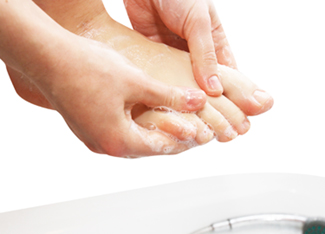
Start with a few repeatable habits. An elaborate soak, a shelf of treatments or a massage device is not required for basic hygiene. Routine care should help you notice changes as well as keep your feet clean. [4]
- Look at your feet. Check the soles, heels, nails and spaces between toes for new marks, broken skin, swelling or redness. With diabetes, make this a daily check.
- Clean and dry the skin. Use gentle soap and comfortably warm water. Dry carefully, including between toes.
- Moisturize dry areas. Apply lotion to dry skin on the tops and bottoms of the feet; leave the toe webs dry.
- Handle nails carefully. Trim across the nail and smooth snagging edges. Get help if you cannot see or reach safely, or if nails are difficult to manage.
- Use clean socks. Change them daily and when damp. Give wet footwear time to dry.
- Check shoe comfort. Look for rubbing, a rough seam or an object inside the shoe. Repeated pressure in the same spot deserves attention. [4] [6]
For a routine you can adapt to mornings, evenings and busy days, read the Daily Foot Care Guide.
Be careful with “extra” treatments
When you have diabetes or reduced sensation, avoid foot soaking, direct heating pads and self-removal of corns or calluses. Ask your care team how to handle problem areas. Heat and skin injury may be harder to notice. [5] [6]
Heel, arch and Achilles problems are different
Pain beneath the heel or along the arch
Plantar fasciitis commonly causes pain under the heel, often during the first steps after getting up or sitting for a while. Assessment matters because other conditions can resemble it. A treatment plan may involve changes to aggravating activity, appropriate footwear and targeted rehabilitation; buying a single comfort product is not the whole plan. [7]
A heel spur on an X-ray
A spur is a bony finding, not proof that the spur itself explains your pain. Many people with heel spurs have no heel pain, and plantar-fascia symptoms can improve without removing a spur. The examination and symptom pattern are important. [7]
Pain behind the heel
Achilles-tendon symptoms can occur at the heel attachment or higher up the tendon. These locations affect how treatment is planned, so a generic stretching routine is not right for every case. A sudden pop or suspected tendon tear needs immediate assessment. [8]
Skin, nails and wounds: identify the problem first
An itchy rash, a discolored nail, a pressure callus and a wound need different approaches. Check whether the change is on the skin, within the nail or where your shoe repeatedly rubs.
Itchy or peeling skin
Athlete’s foot is a fungal skin infection that often affects the spaces between toes. A pharmacist can advise on suitable antifungal products. Follow the label and keep feet clean and dry; seek medical advice if the problem persists, becomes painful or involves a high-risk foot. [9] Our athlete’s foot treatment guide explains the shopping considerations.
Thickened, brittle or discolored nails
Nail changes are not always fungal. A clinician may take a sample to confirm the cause before choosing treatment. Nail-specific medicines and, in some cases, oral prescriptions may be considered; the best option depends on the diagnosis and your health history. [10] Read the toenail fungus treatment guide before relying on a cosmetic improvement as proof of a cure.
Corns, calluses and dry heels
Corns and calluses are linked to repeated pressure or friction. Addressing the source—such as a rubbing shoe—matters alongside skin care. Do not cut away hard skin. People with diabetes or circulation problems should get professional advice before using removal treatments. [11] [6]
Useful comparisons include corn versus callus, callus-care products and creams for dry, cracked heels. Choose by the actual skin problem and product instructions.
Cuts, blisters and open areas
Do not treat a wound as an exfoliation problem. A new sore in a high-risk foot or signs of infection need prompt care. [5] The cut-on-the-bottom-of-the-foot guide covers questions to consider, but it cannot assess the depth or infection risk of an individual wound.
Diabetes, reduced sensation and healthy aging
General self-care advice needs adjusting when you cannot reliably feel pressure, heat or a skin injury. The absence of pain does not always mean a foot problem is minor. [5]
Diabetes & high-risk feet
Diabetes can affect sensation and circulation, making an unnoticed sore harder to heal. Use a mirror or get help with inspection if needed, and ask for advice about new redness, warmth, swelling or broken skin. [5]
Practical help as needs change
If vision, reach or balance makes inspection or nail care difficult, arrange help instead of struggling with sharp tools. Discuss recurring shoe pressure, hard-to-manage nails or changes in walking with a clinician.
Use these guides to prepare questions for your care team. A clinician can assess sensation, circulation, skin condition and footwear together; a product listing cannot do that examination.
Shoes, socks and insoles: start with fit
Price and cushioning are only part of the decision. A shoe should match the shape and size of your foot and the activity you intend to do. Try both shoes with the socks you normally use. [12]
- Toe room: AAOS suggests about half an inch between the longest toe and the shoe’s end. The longest toe is not always the big toe.
- Width: Look for the correct width rather than simply buying a longer shoe to escape squeezing.
- Secure fit: Your heel should be held comfortably without the shoe pressing or rubbing.
- Insole space: A replacement insert changes the space inside the shoe. Removable factory insoles offer more flexibility for fitting another insert. [12]
When comparing an insole, check its shape, thickness and compatibility with the footwear you already own. If you are uncertain whether you need a prescription device or help managing a medical condition, get an individual assessment before buying.
Foot and ankle surgery: follow the operation-specific plan
There is no single recovery calendar for every foot operation. Before and after surgery, make sure you understand your permitted weight-bearing, how you will get around and when those instructions may change. If you are told to remain non-weightbearing, do not test the repair by briefly standing on that foot. [13]
Keep written instructions for dressings, bathing, elevation, medication and follow-up appointments. Ask whom to contact about unexpected pain, swelling, a wound change or a problem with your boot or cast. Also ask when normal footwear, exercise, soaking or massage would be appropriate for your procedure.
Compare support and comfort products thoughtfully
Once you understand the kind of product you want, compare features that affect everyday use. For massage, consider the sensation, fit and pressure controls. For an insole, consider the shoe as well as the insert. A product’s price, reviews or marketing claims cannot establish whether it suits an unexplained symptom.
Before heat, massage or compression: follow the device warnings and ask your clinician about suitability if you have reduced sensation, circulation problems, a wound, an injury or unexplained swelling.

Electric foot massagers
Compare kneading, shiatsu and compression designs for the massage experience you prefer.
Look for: adjustable intensity, foot-size capacity, accessible controls and clear cleaning instructions.
Compare foot massagers →Browse electric massagers on Amazon
Foot & calf designs
Explore how broader-coverage devices differ from foot-only machines and compression wraps.
Look for: comfortable positioning, lower-leg fit, a manageable weight and enough floor space.
Explore massage types →Browse foot-and-calf devices on Amazon
Foot spa baths
For people who enjoy soaking and can safely do so, compare basin designs and practical features.
Look for: interior size, how heating works, drainage, cleaning and storage. Follow instructions about additives.
Compare foot spa baths →Browse foot spas on Amazon
Insoles & arch support
Compare cushioning and support options that can fit the shoes you intend to wear.
Look for: compatible size, thickness, arch shape, trimming instructions and the seller’s return terms.
Compare insoles →Browse insoles on AmazonConsidering a particular brand? Read the RENPHO foot massager review for features and limitations to examine before ordering.
Prepare a useful note for an appointment
Bring a brief symptom history rather than a long list of possible diagnoses. Record when the problem started, its exact location, what makes it better or worse, and any recent injury, activity change or new footwear. Mention changes in sensation, wounds, diabetes, circulation problems and previous foot surgery.
Also list the products or treatments you have tried. If shoes or an insert seem involved, take them with you so the clinician can understand the fit and pressure you are describing.
Common foot-health questions
Can I work out the cause of pain from its location?
Location helps you choose a relevant guide, but it cannot confirm a diagnosis. The same area may hurt for different reasons. Use the pain location guide to organize symptoms, and seek assessment for persistent, worsening or concerning problems.
Do healthy feet need regular foot soaks?
Basic care centers on cleaning, drying, inspection and suitable footwear. A soak is an optional preference, not a required routine. CDC advises people with diabetes not to soak their feet. [6]
Can a foot massager replace treatment for foot pain?
A consumer massager is a comfort product, not an examination or diagnosis. The right response to pain depends on the cause. Follow device warnings and seek individual advice about heat, pressure or compression when you have a medical condition.
Where should I start if I am only comparing products?
Choose a product type first, then compare fit, adjustment, controls, cleaning and returns. Start with the foot massager buying guide, insole guide or shoe advice hub.
Sources & editorial notes
This guide summarizes public health and professional patient-education resources. It is not a personal diagnosis or an individualized treatment plan. Source references support the health information; product images and shopping links do not imply endorsement by these organizations.
- MedlinePlus: Arterial embolism — emergency circulation symptoms.
- NHS: Pain in the top of the foot — injury and urgent-care warning signs.
- MedlinePlus: Foot pain — causes and reasons to seek assessment.
- CDC: Healthy habits — foot hygiene — basic hygiene.
- NIDDK: Diabetes & foot problems — higher-risk feet and care precautions.
- CDC: Your feet and diabetes — daily care and prevention.
- AAOS: Plantar fasciitis and bone spurs — heel-pain patterns and management.
- AAOS: Achilles tendinitis — tendon locations and rupture warning signs.
- NHS: Athlete’s foot — fungal skin symptoms and care.
- American Academy of Dermatology: Nail fungus diagnosis and treatment.
- American Academy of Dermatology: Corns and calluses.
- AAOS: Shoes — finding the right fit.
- AOFAS FootCareMD: Non-weightbearing after surgery.
Medical disclaimer: FeetHealth.org provides general educational information. A qualified health professional should assess your individual symptoms, wounds, circulation, sensation and treatment needs. If you think you have an emergency, seek emergency medical help.